
SEO vs AEO vs GEO in 2027: How Can Your Business Get Found on Google and AI Search?
Imagine a potential customer searching for a service your business offers.
A few years ago, they might have typed a few keywords into Google, visited several websites, and compared their options.
Today, they may ask Google, ChatGPT, or Microsoft Copilot a detailed question and receive a summarised answer, sometimes with links to recommended sources.
The challenge for businesses in 2027 is no longer just ranking on Google. It is being discoverable, understandable, and credible wherever customers search for answers.
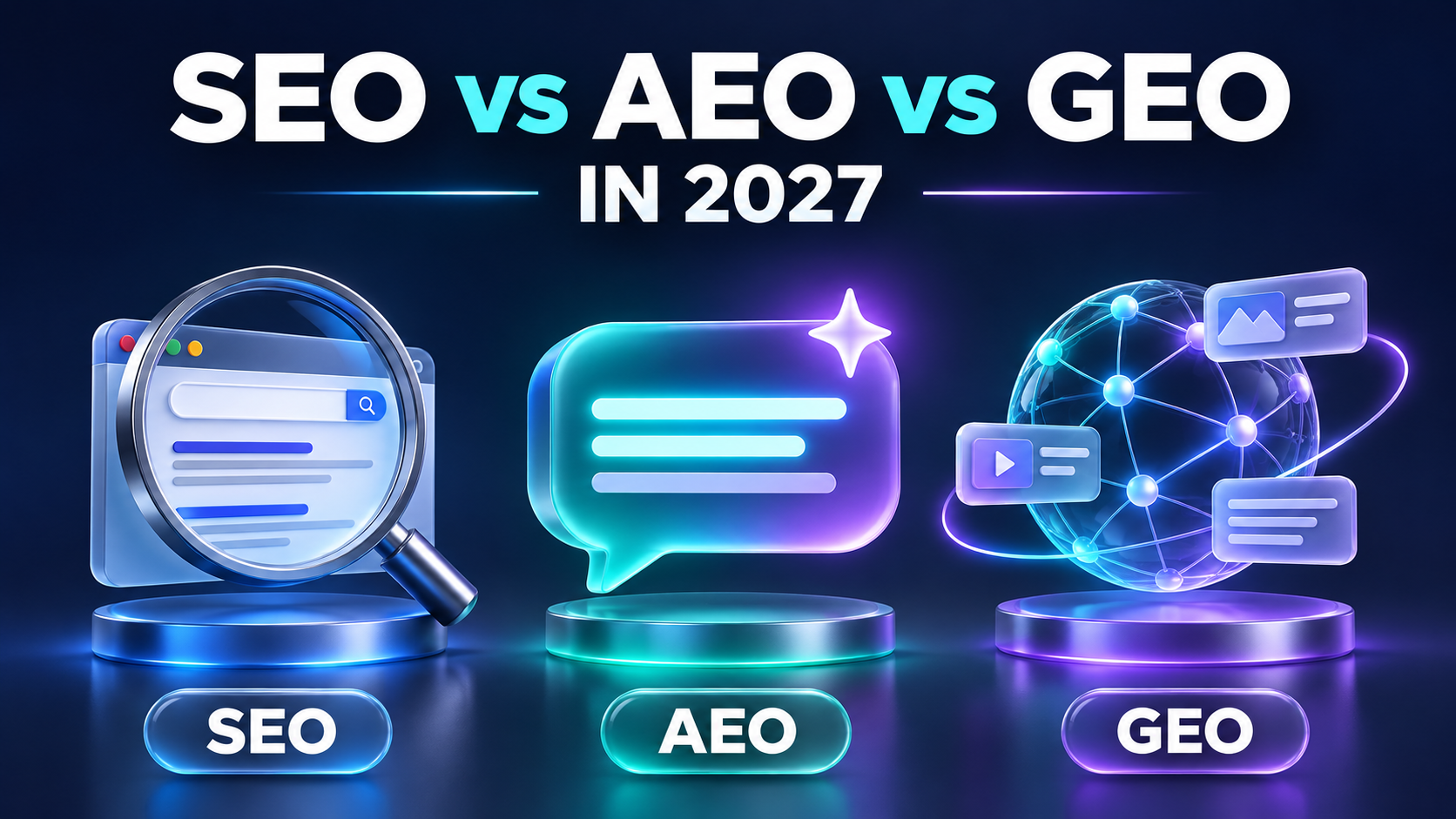
This is where SEO, AEO, and GEO enter the conversation.
But do you really need three different optimisation strategies?
Let’s understand what matters and where your business should invest.
Quick Summary: What Are SEO, AEO and GEO?
- SEO (Search Engine Optimisation): Helps search engines discover, understand, and rank your website for relevant searches.
- AEO (Answer Engine Optimisation): Focuses on making your content useful for systems that provide direct answers to questions.
- GEO (Generative Engine Optimisation): Focuses on improving how clearly and credibly your business and content can be represented in AI-generated responses.
These approaches overlap considerably. SEO remains the foundation, while AEO and GEO emphasise clear answers, reliable information, and content that AI-powered systems can interpret and reference.
None guarantees rankings, recommendations, or AI citations.
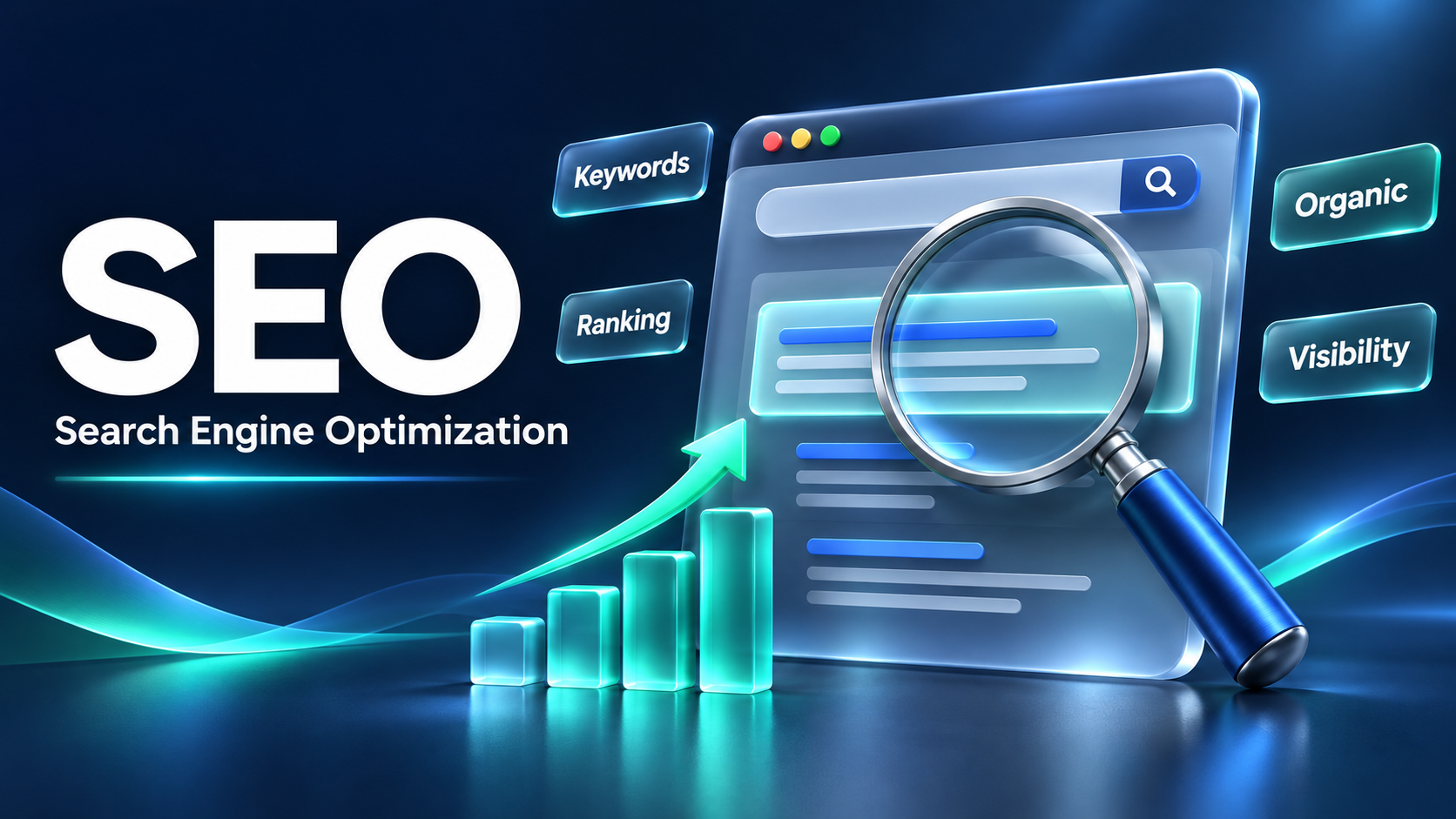
1. SEO: Can Customers Find Your Business on Google?
Search Engine Optimisation helps your website appear for searches related to your products, services, and expertise.
For example, a business owner in the United States might search for:
- Digital marketing services for small businesses
- Google Ads management agency
- Website conversion optimisation services
- B2B lead generation consultants
SEO helps search engines understand which pages are relevant to those searches.
A strong SEO strategy includes useful website content, clear service pages, appropriate keywords, internal links, technical website health, and credible information.
Why SEO still matters in 2027
AI-powered search experiences still depend on discovering and evaluating web content.
If search engines cannot access or understand your website, your opportunities for visibility may be limited.
SEO is not becoming irrelevant. It is becoming part of a broader search visibility strategy.
2. AEO: Does Your Website Answer Customers' Questions?
Answer Engine Optimisation focuses on helping people find clear answers to their questions.
Consider a business owner asking:
“Why are my Facebook ads getting clicks but no sales?”
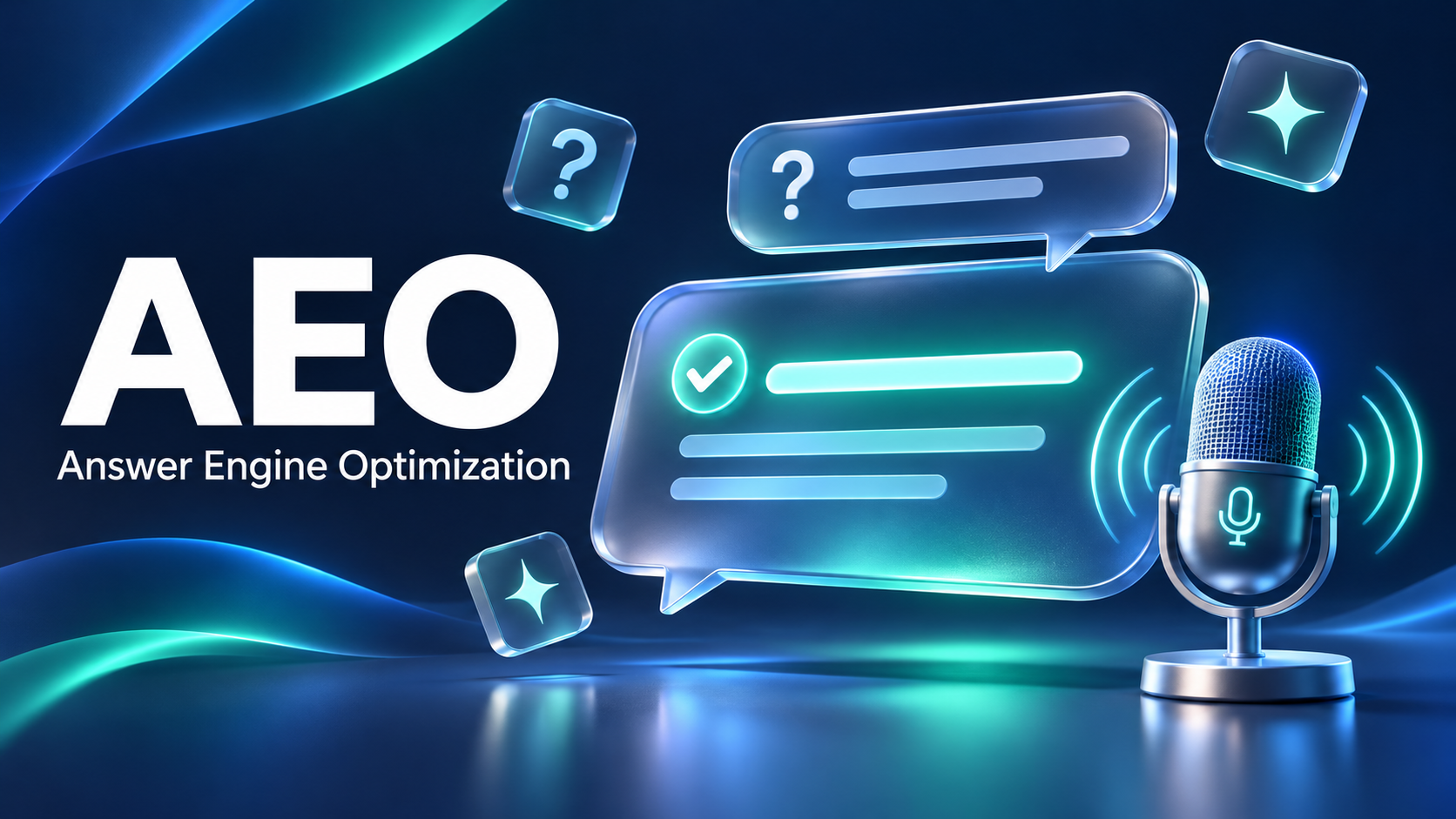
A page that simply lists Facebook advertising services may not fully satisfy that question.
A more useful page would explain possible causes, such as:
- An offer that doesn’t match customer expectations
- Weak landing-page messaging
- Confusing calls to action
- Poor lead follow-up
- Problems with the checkout or enquiry process
The second page addresses the customer’s actual problem.
How to make content more answer-friendly
Use descriptive headings, answer important questions directly, explain unfamiliar terms, and include practical examples.
FAQs can help when they address genuine customer concerns, but adding dozens of repetitive questions is not a shortcut to visibility.
The goal is to make information easier for people and search systems to understand.
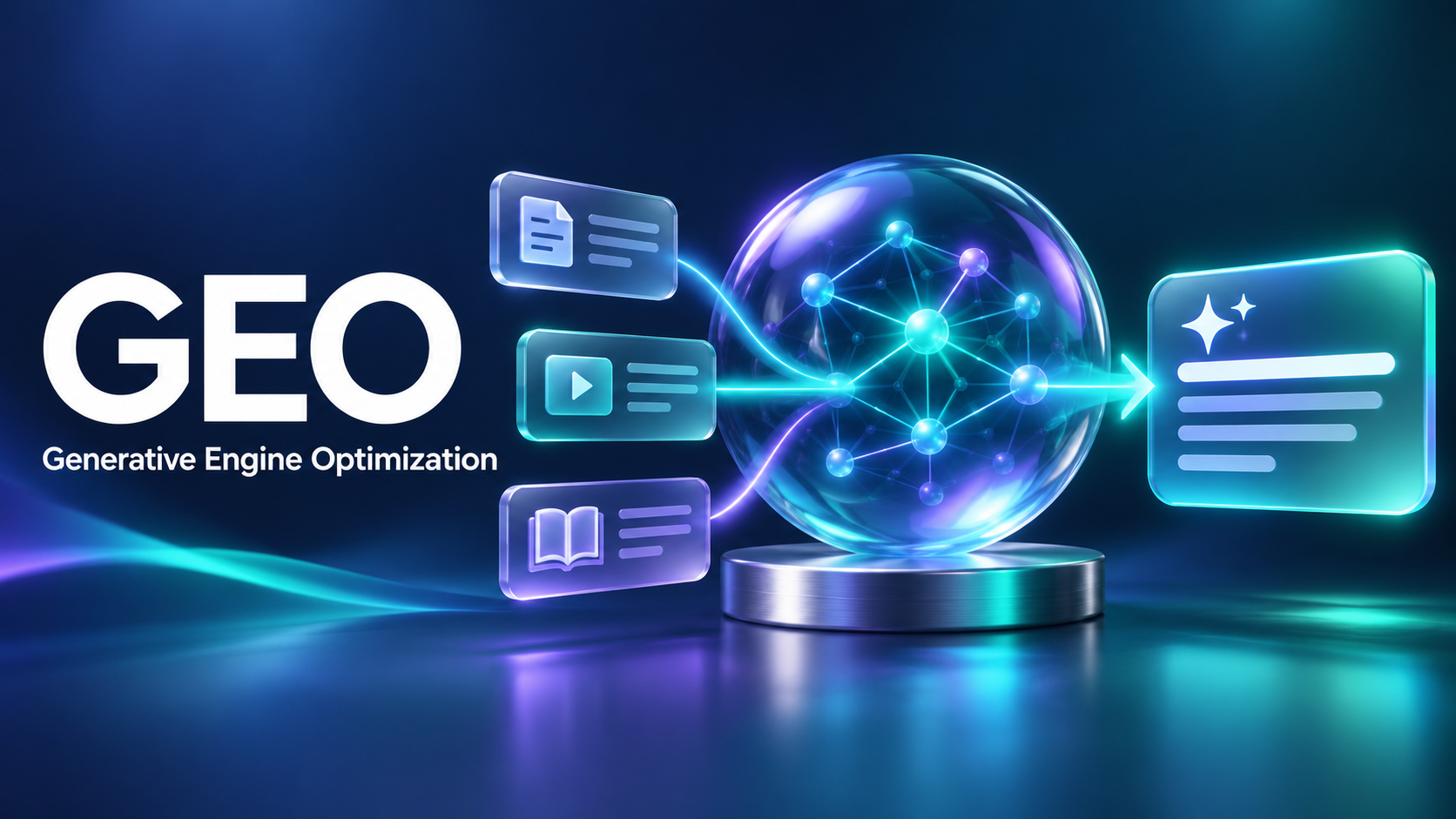
3. GEO: Can AI Search Systems Understand and Reference Your Expertise?
Generative Engine Optimisation is a term used for improving content’s suitability for AI-generated search experiences.
Someone might ask an AI assistant:
“What should I check before hiring a marketing agency to improve lead conversions?”
An AI-generated response may draw on multiple sources discussing marketing audits, customer journeys, advertising performance, and conversion optimisation.
Businesses publishing useful, original, well-supported information may have opportunities to be referenced in these responses.
However, AI systems do not necessarily recommend businesses simply because their websites mention GEO or contain AI-focused keywords.
What can support GEO efforts?
- Original insights and practical experience
- Clear explanations of your services and expertise
- Case studies with verifiable results
- Consistent business and author information
- Reliable sources supporting factual claims
- Accessible, well-structured website content
For businesses serving international markets, clear service descriptions and audience-specific examples can also help communicate relevance across different regions.
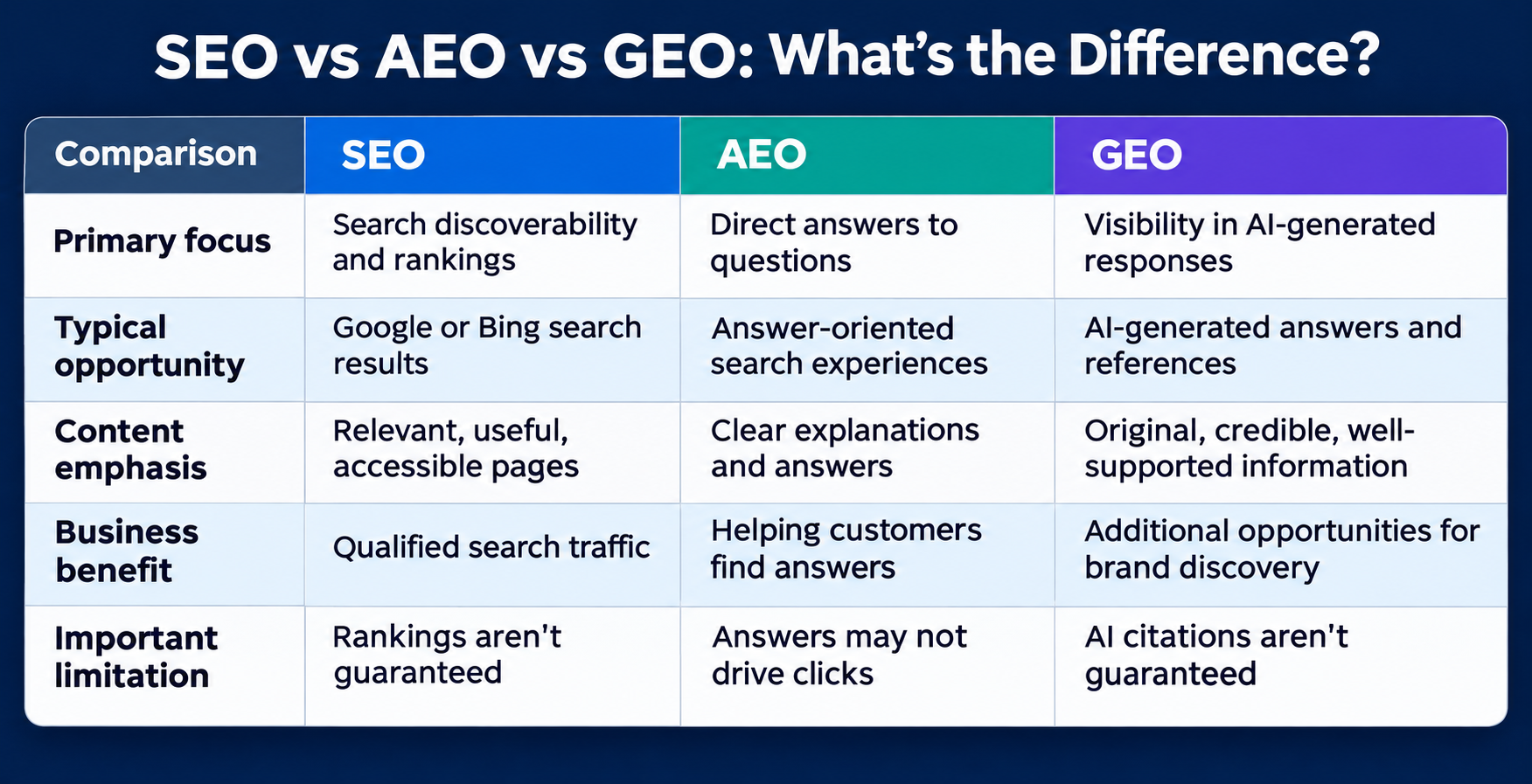
The important takeaway: You do not need three disconnected marketing strategies. You need one connected search visibility strategy that addresses all three.
4. Why Your Business May Be Invisible Even When You Have a Website
Having a website doesn’t automatically mean potential customers will find you.
At LITOS, we approach digital visibility as part of the wider customer journey.
A business may have a professional website, publish regular social media posts, and invest in advertising, yet still struggle to attract relevant enquiries.
The underlying issues may include:
Visitors want to know whether you understand their challenges and can provide a suitable solution.
High traffic is not particularly valuable when visitors have little interest in your offering.
Generic descriptions may not demonstrate why someone should trust your expertise.
Even when visitors discover your business, unclear offers, weak copywriting, or poor follow-up can prevent them from taking action.
This is why improving search visibility should never be separated from improving the customer experience.
5. Seven Practical Steps to Prepare Your Website for AI Search in 2027
You don’t necessarily need to rebuild your entire website. Start by examining what you already have.
Step 1: Review Your Existing Search Visibility
Use Google Search Console and Bing Webmaster Tools to understand which pages are indexed, what searches bring visitors, and where technical issues exist.
Step 2: Identify Your Customers' Real Questions
Research the problems people want solved before choosing keywords.
For example, instead of focusing only on email marketing services, consider questions such as why are my email subscribers not converting?
Step 3: Improve Your Most Important Service Pages
Make your services, target audience, process, and next steps easy to understand.
Connect customer problems with practical solutions.
Step 4: Publish Original, Experience-Based Content
Share insights from real business challenges, audits, projects, and lessons learned.
Avoid publishing generic AI-generated articles that simply repeat information already available online.
Step 5: Strengthen Your Business Credibility
Include accurate company information, relevant experience, author profiles, client examples, and genuine testimonials where available.
Step 6: Connect Your Website Content
Use relevant internal links between blogs, service pages, case studies, and related resources.
Help visitors discover useful information without searching through your entire website.
Step 7: Measure Business Results, Not Just Visibility
Monitor organic search traffic, relevant enquiries, conversion rates, and available AI search referral data.
A page receiving fewer visits but generating qualified enquiries may be more valuable than one attracting thousands of irrelevant visitors.
6. What Should Business Owners Prioritise in 2027?
If your business already has a website, social media accounts, advertising campaigns, and marketing tools, investing in another platform may not be the first step.
Ask yourself:
- Can potential customers discover our business through relevant searches?
- Does our content answer the questions they are asking?
- Do we demonstrate enough expertise to earn their trust?
- Does our website guide interested visitors towards an enquiry or purchase?
- Are we measuring business outcomes or simply marketing activity?
The answers can help identify whether your next investment should be in SEO, content development, website improvements, conversion optimisation, or another part of your marketing system.
Frequently Asked Questions
Is SEO still important in 2027?
Yes. SEO remains fundamental to website discoverability, including eligibility for many AI-powered search experiences. Businesses should continue focusing on accessible websites, useful content, and relevant search intent.
What is the difference between AEO and GEO?
AEO focuses on making content suitable for direct answers, while GEO emphasises its usefulness and credibility in generative AI responses. In practice, many of their recommended activities overlap with good SEO.
Can I optimise my website for ChatGPT and Google AI Overviews?
You can improve your website's accessibility, clarity, credibility, and content quality to support discoverability. However, there is no guaranteed method for appearing in ChatGPT responses or Google AI Overviews.
Do small businesses need SEO, AEO, and GEO?
Small businesses benefit from a connected search strategy. The level of investment should depend on their customers, market competition, existing website performance, and business goals.
How long does SEO and AI search optimisation take?
Results vary depending on website condition, competition, content quality, and search platform behaviour. Search visibility improvements generally require ongoing work and monitoring rather than expecting immediate results.
Conclusion: Search Visibility Is Only the Beginning
In 2027, businesses need to think beyond individual keywords and search rankings.
Customers want relevant answers, credible information, and businesses that understand their needs.
SEO helps your website become discoverable. AEO encourages clearer answers. GEO focuses on opportunities within AI-generated search experiences.
But visibility alone doesn’t grow a business.
The real opportunity lies in connecting search visibility with persuasive website content, relevant offers, customer trust, and a clear path towards conversion.
Is Your Business Ready for Search in 2027?
At LITOS, we help businesses identify the gaps between online visibility, website performance, marketing activity, and business results.
Our SEO, AIO & GEO services combine search visibility strategy, content optimisation, website analysis, and practical recommendations aligned with your growth objectives.
Before investing in more content or new tools, understand what your business actually needs.
Find the Gap. Fix the System. Grow with Purpose.
Visit www.litos.co.in to explore how LITOS can support your business growth.